
Last updated September 20, 2026
Free on-site gate assessment - hinges, posts, and your LiftMaster or Nice gate operator checked before anything is quoted
The assessment is free and the quote is the invoice.
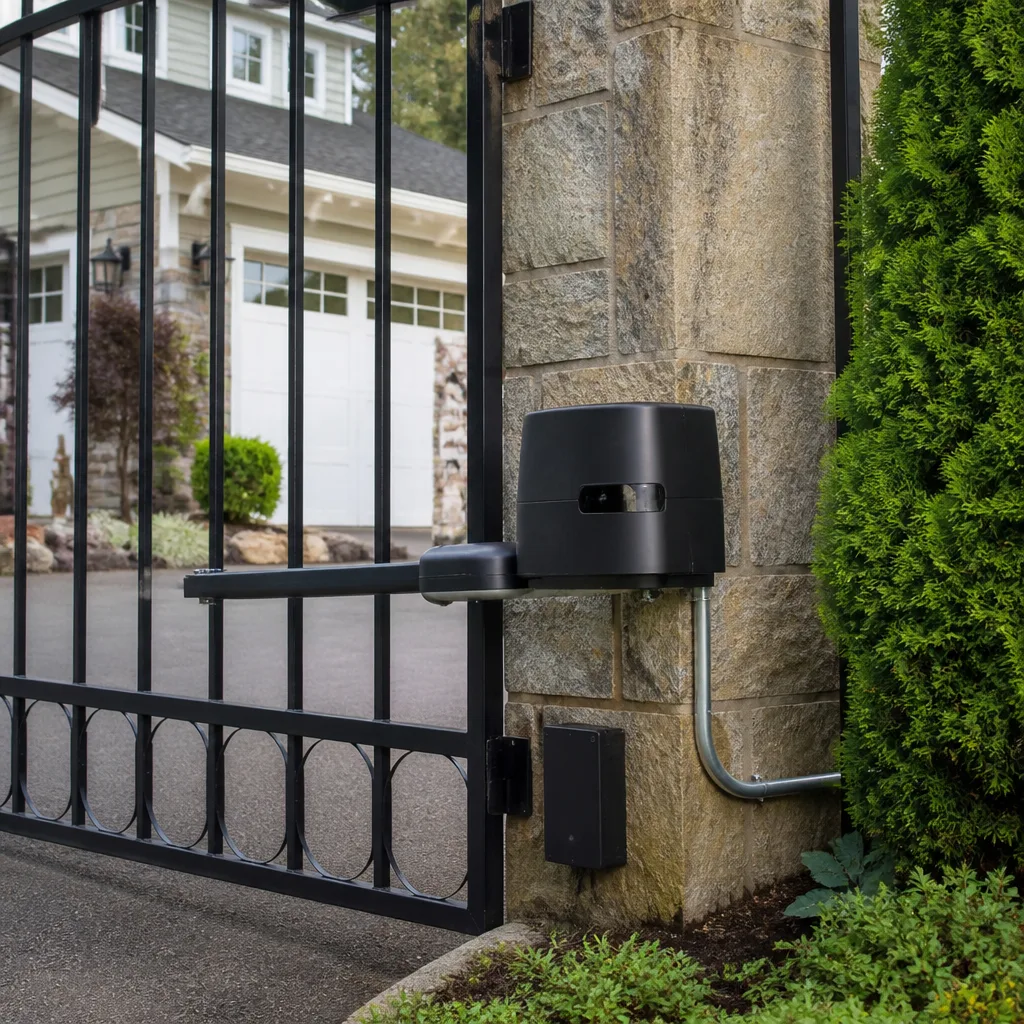
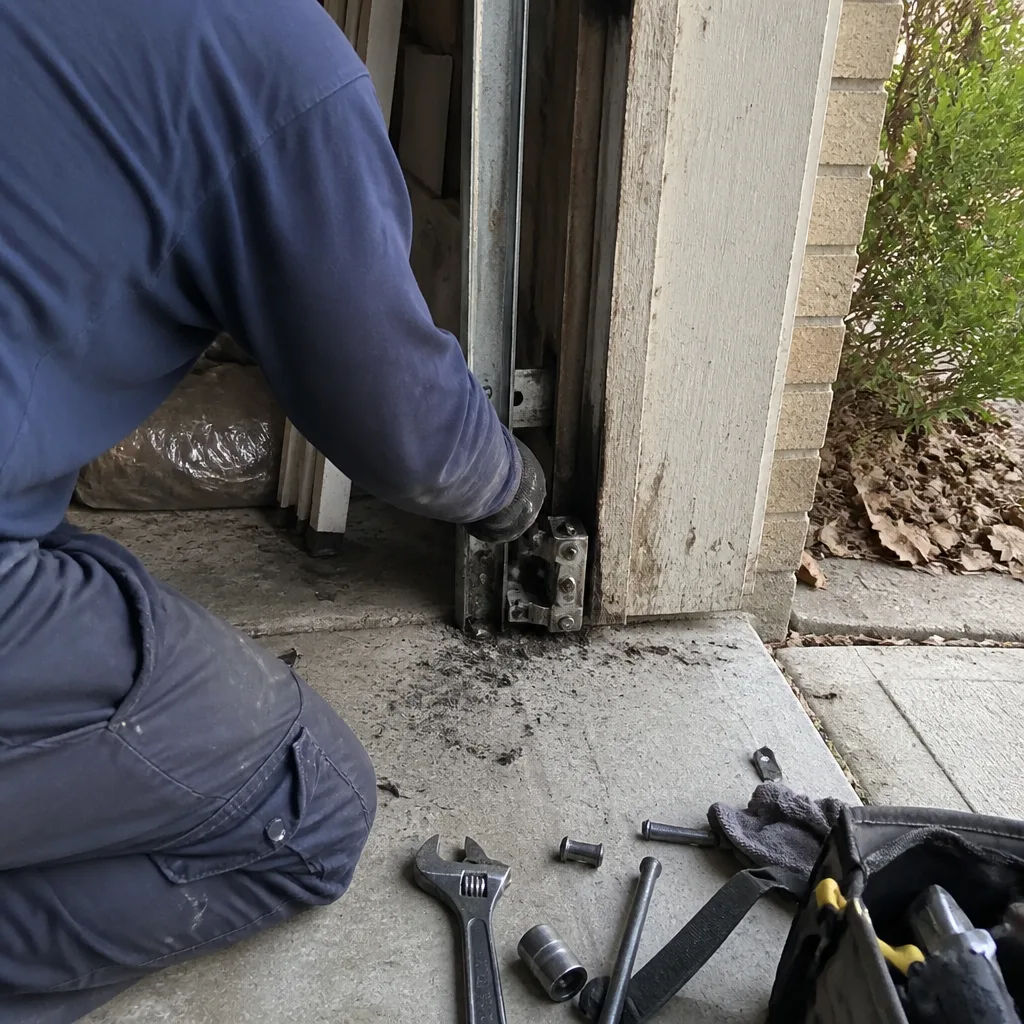 Before
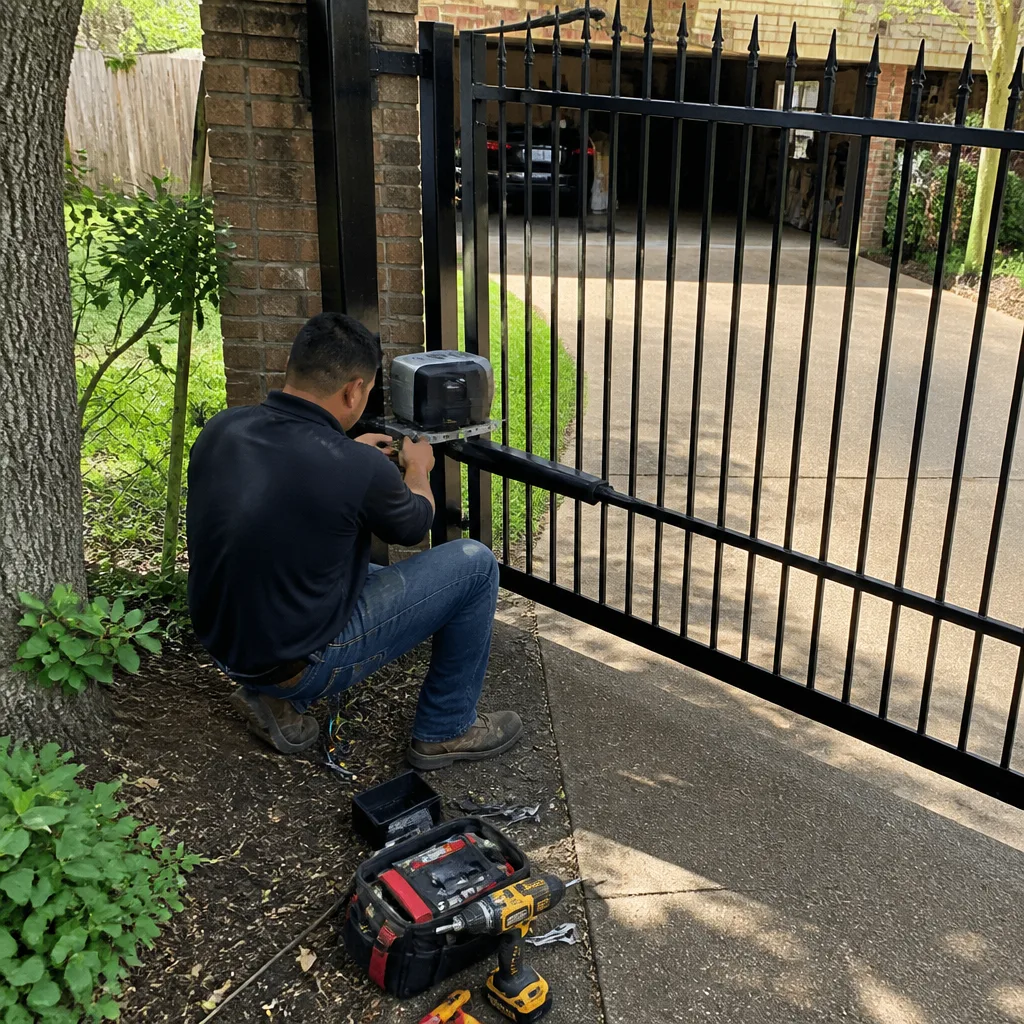 After
After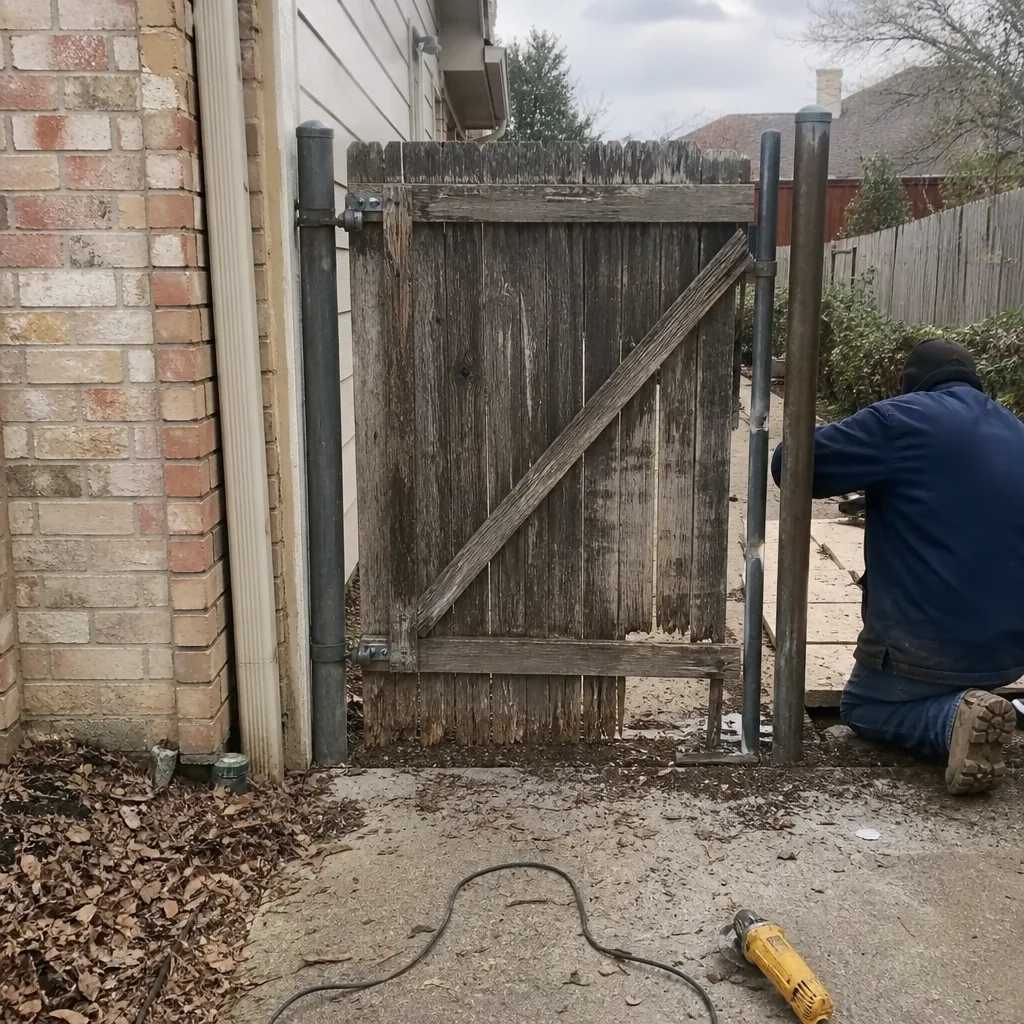 Before
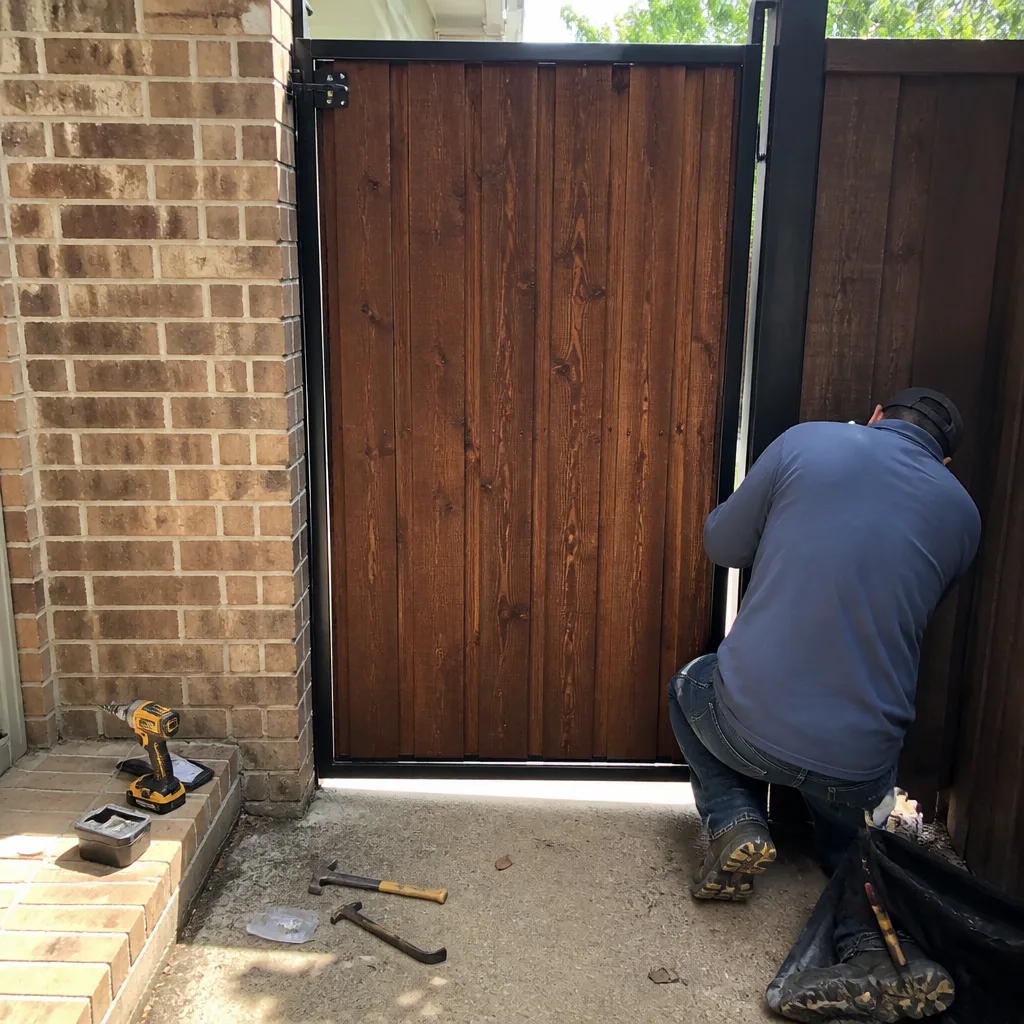 After
After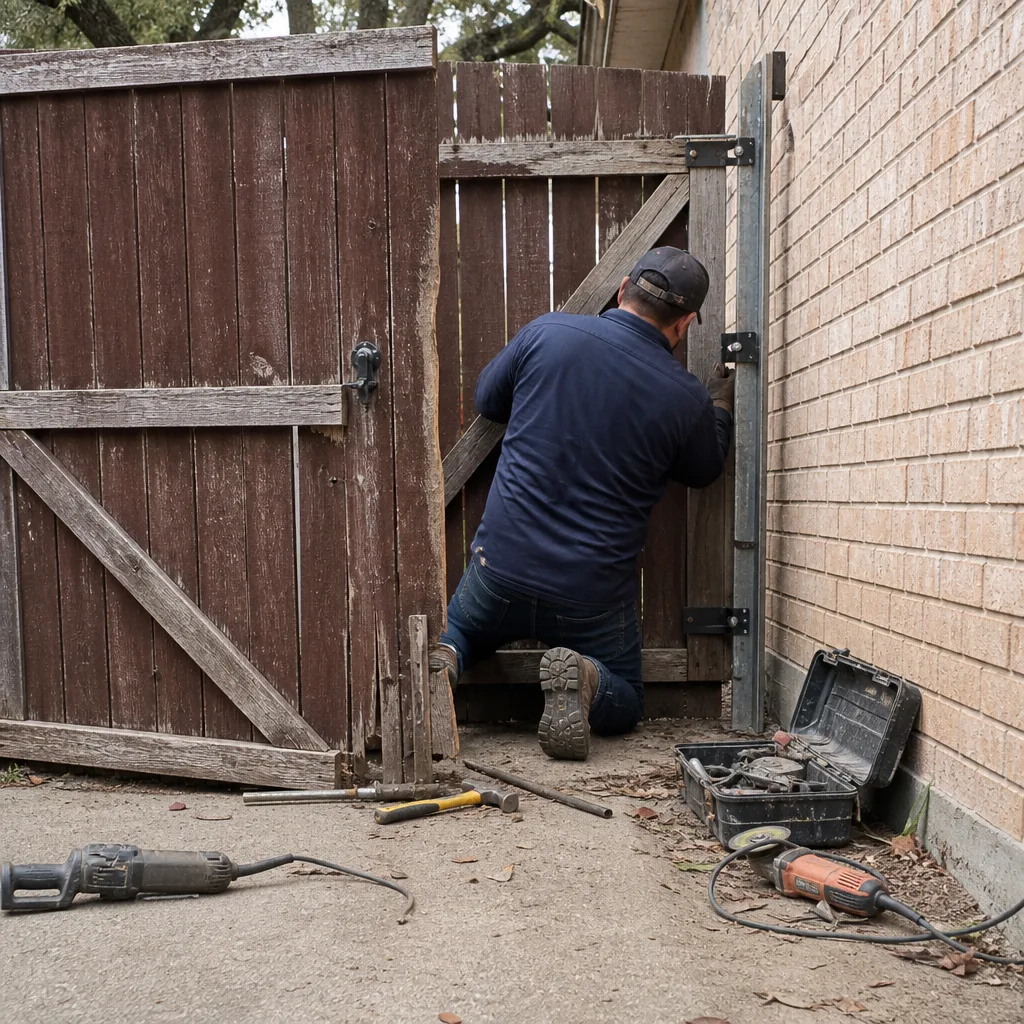 Before
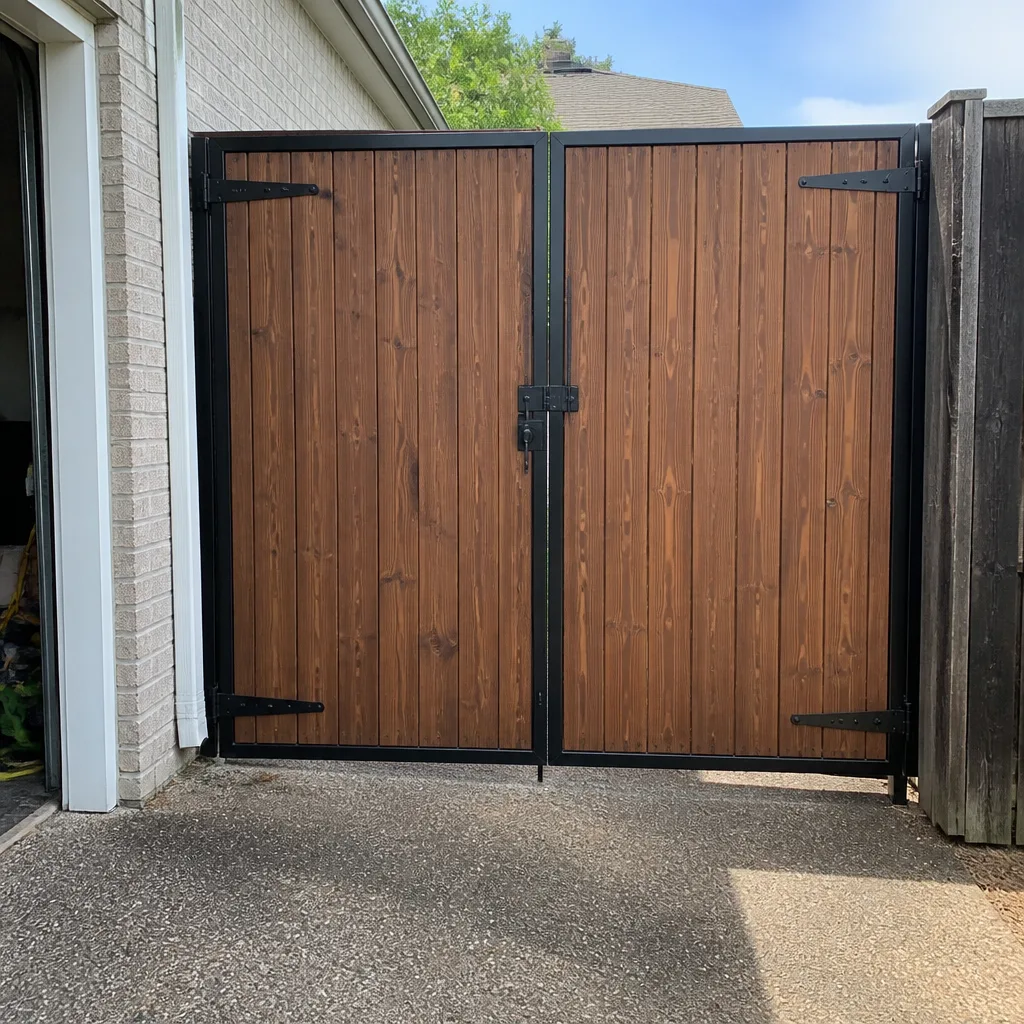 After
AfterThe Complete Guide to Gate Repair in Irving
A replacement motor bolted onto a gate with a drifting post will fail again in the same spot within 18 months. We see that cycle repeat across Irving more than any other failure pattern, and it persists because most repair visits end without a single written note about what actually caused the original breakdown. This guide will walk you through how gates actually fail here in Irving, what the real fix costs, and how to stop paying for the same repair twice. For Gate Repair Cost Breakdown: The Irving Homeowner’s Reference for 2026, see our detailed pricing guide.
Quick Answer
Gate repair in Irving, Texas typically costs between $180 and $2,900 depending on whether the failure is a $30 photo-eye adjustment, a $400 swing-arm replacement, or a full operator swap on a warped post. Most residential repairs in Irving take between 90 minutes and one full day, and the honest first step is not buying a part but identifying whether the problem is structural, electrical, or mechanical.
Table of Contents
- How Gates Actually Fail in Irving: Soil, Heat, and the Misdiagnosis Problem
- The Three Failure Types: Structural, Electrical, and Mechanical
- How Irving’s Expansive Clay Soil Shifts Gate Posts
- What a Complete Repair Record Should Contain
- Which Repairs Need an Electrician vs. a Gate Technician in Texas
- Repair or Replace: A Written Cost-to-Value Framework
- Common Mistakes to Avoid
- When to Call a Professional
- Frequently Asked Questions
- The Bottom Line
BeforeAfterHow Gates Actually Fail in Irving: Soil, Heat, and the Misdiagnosis Problem
Gates in Irving do not usually die from old age. They die from slow, measurable environmental changes that get ignored until a component snaps under the accumulated stress, and then the component gets blamed. The motor gets replaced. Six months later the hinge welds crack. A year later the new motor is grinding. The homeowner has now paid for two or three repairs that each treated a symptom while the actual cause, a post that moved a half inch out of plumb during a dry summer, stayed completely unaddressed.
What makes Irving uniquely hard on gates is the combination of heavy clay soil, long hot summers, and sudden rain events. The soil expands when wet and contracts when dry, and it does this unevenly across the width of any footer. A gate post set in that soil moves seasonally. Sometimes the movement is a quarter inch. Sometimes it is an inch and a half over two years. Either way, the gate’s geometry shifts, the hinge loads become uneven, and the motor begins working against friction it was never sized for.
So the first question on any gate repair in Irving is not “Which part broke?” but “What changed in the structure or the electrical supply before the part broke?” If no one documents that answer, the next technician starts from zero and replaces another part. If someone does document it, the repair becomes a fix instead of a rental.
Understanding these triggers matters because it changes what a responsible repair looks like. A proper Irving gate repair often means resetting a post, re-shimming a hinge, or adding a thrust bearing to a wheel that has been grinding against a shifted concrete approach. It does not always mean replacing a motor. And when a motor does need replacing, the technician should be able to show you the limit-switch readings, the current draw, and the alignment measurements that led to that conclusion, not just say the motor is bad.
The Three Failure Types: Structural, Electrical, and Mechanical
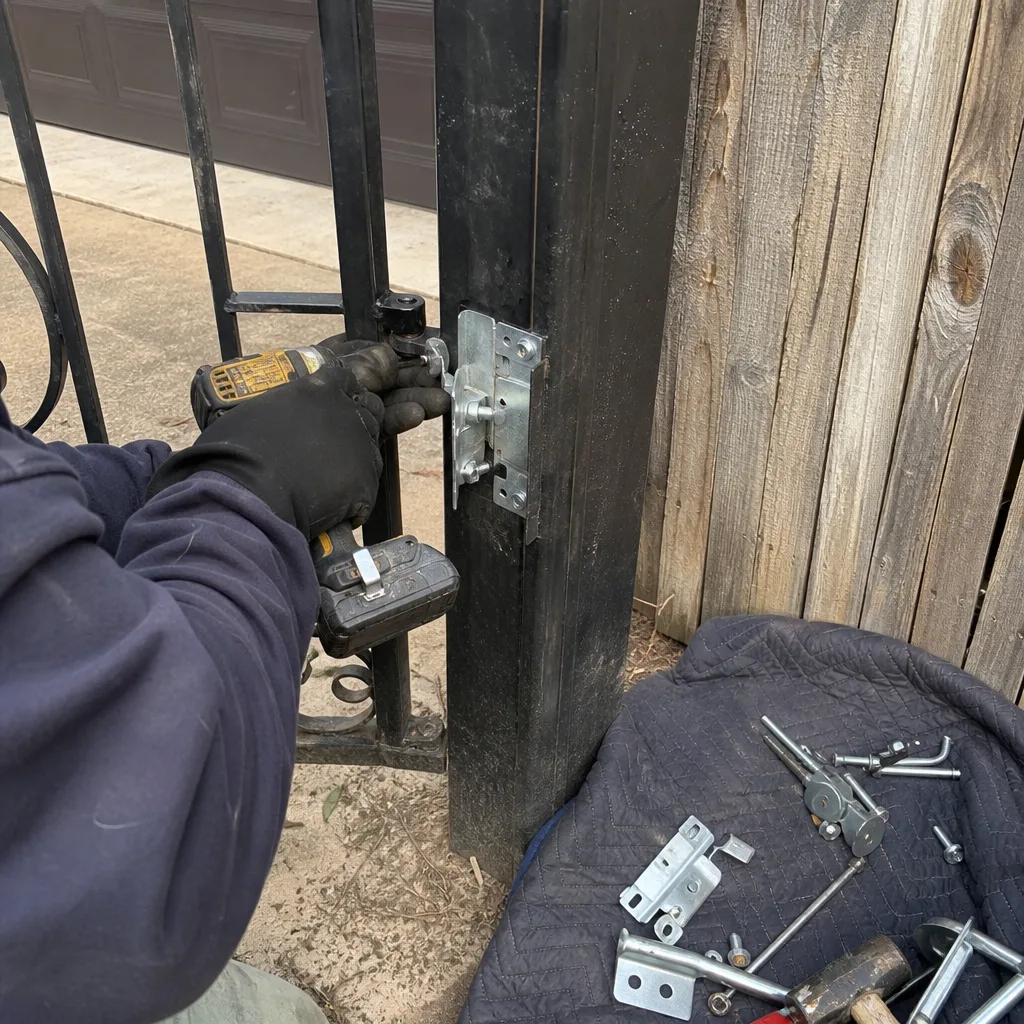
Every gate problem in Irving falls into one of three categories, and each requires a different first move. Use this framework before you spend a dollar on parts.
1. Structural Failure
The gate post, hinge, weld, or track has moved or degraded. You will notice the gate dragging on the ground at one corner, a visible gap opening between the gate and the post, or a lean that changes depending on how dry the soil is.
First move: A level check and a plumb check on both the gate and the post. If the post is moving seasonally, no new motor will fix the problem. The fix is re-setting the post or re-welding the hinge with the gate properly supported.
2. Electrical Failure
The operator receives no power, the control board has failed, the safety photo-eyes are misaligned, or a capacitor in the motor has burned out. On a Mighty Mule or Ghost Controls unit in Irving, capacitor failures become more common as the units age past five years, especially when they run 20 or more cycles per day.
First move: A multimeter reading at the board and the motor terminals. Check incoming voltage first, then continuity on safety devices, then the capacitor and board. This order matters. Replacing a board when the real problem is a bad ground rod wastes $400 and fixes nothing.
3. Mechanical Failure
The gears, arm, chain, or wheel have physically worn out. This is the classic swing-arm operator whose internal gear stripped after years of pushing against a slightly binding hinge. Or a slide-gate wheel that has ground itself flat because the track was never leveled.
First move: Remove the load. Disengage the operator and move the gate by hand. If it is heavy, binding, or lurching without the motor connected, the mechanical issue is in the gate itself, not the operator. If the gate swings freely and the motor still struggles, then the motor or gearbox is the problem.
In our experience repairing gates across Irving, the mechanical failure is the one most likely to be misdiagnosed before we arrive, because a stripped gear always sounds like a motor problem on the phone. The gate groans, grinds, or buzzes, so the assumption is a bad motor. We have opened plenty of these to find the gear set destroyed while the motor windings tested perfectly fine.
How Irving’s Expansive Clay Soil Shifts Gate Posts
Irving sits on the Eagle Ford Shale and alluvial deposits that weather into highly expansive clay. That clay shrinks during our long dry stretches, then swells after heavy rain. The movement is not theoretical. Foundation repair companies across Dallas County have built a whole industry on the same mechanism that slowly ruins gate posts.
A gate post behaves like a tiny foundation. It is a vertical steel member set in a concrete footer, usually 24 to 36 inches deep. In stable soil, that is enough. In Irving clay, the top layers of soil around the footer expand and contract with moisture content while the deeper layers stay more stable. The result is a slow, seasonal tilt. The top of the post moves a few degrees away from its original axis, and the gate, bolted to that post, begins to drag or bind.
We have seen this pattern most clearly in established neighborhoods like Valley Ranch and Las Colinas, where the clay content is high and many gates are 10 or more years old. A homeowner will call about a gate that worked fine in March, then started dragging in August. The drive belt, the hinges, the motor, all can get blamed. But if you put a level on the post in March and again in August, you will often see the real story.
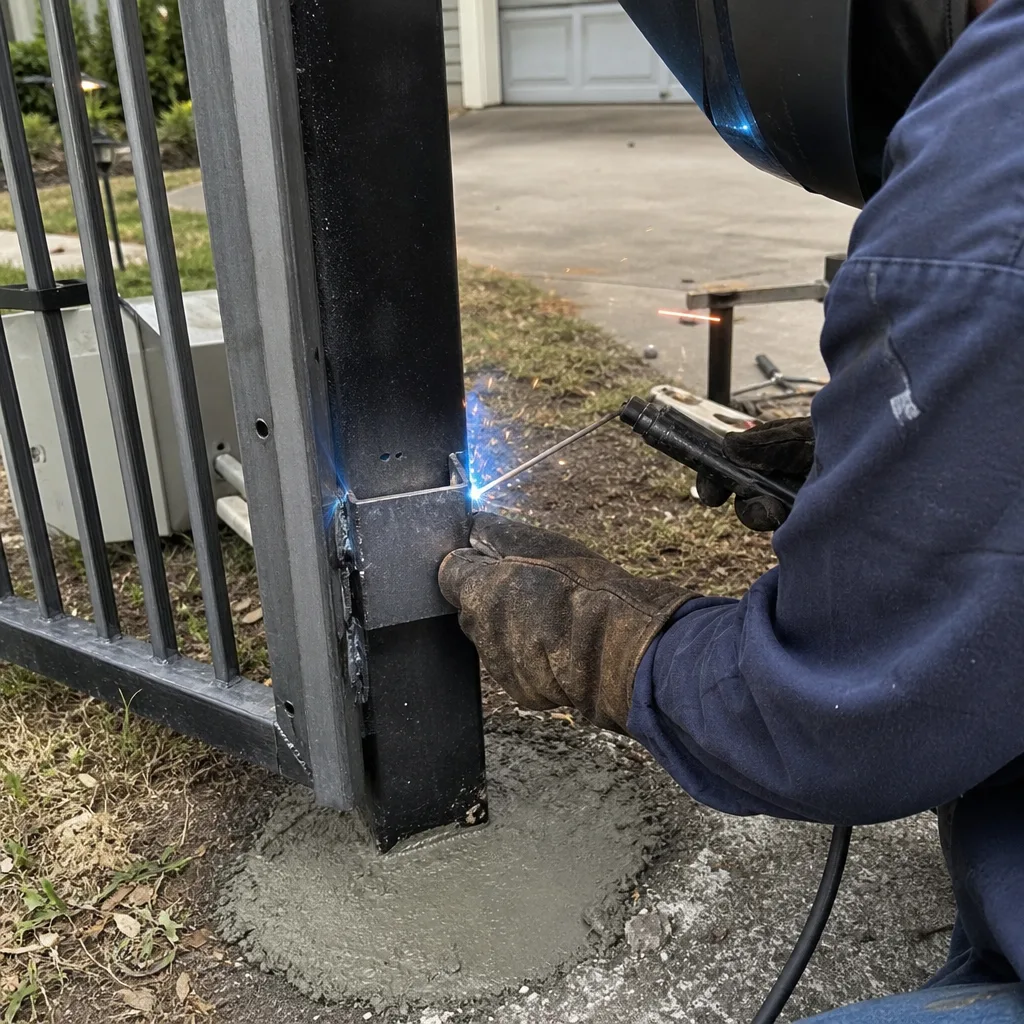
The long-term fix for a soil-shifted post in Irving is not simply pushing it back and hoping. It usually involves excavating the footer, checking for erosion and root intrusion, re-setting the post in new concrete, and often using a deeper footer or adding a steel collar plate. In some cases, we also add a thrust bearing at the bottom hinge to absorb small movements so future seasonal shifts do not transmit directly into the hinge and welds.
This is the repair most competitors in Irving skip because it takes half a day and requires concrete work. It is also the repair that ends the cycle of motor replacements. If your gate has already eaten two operators in three years, the odds are extremely high that the post is the cause, not the brand of motor.
What a Complete Repair Record Should Contain
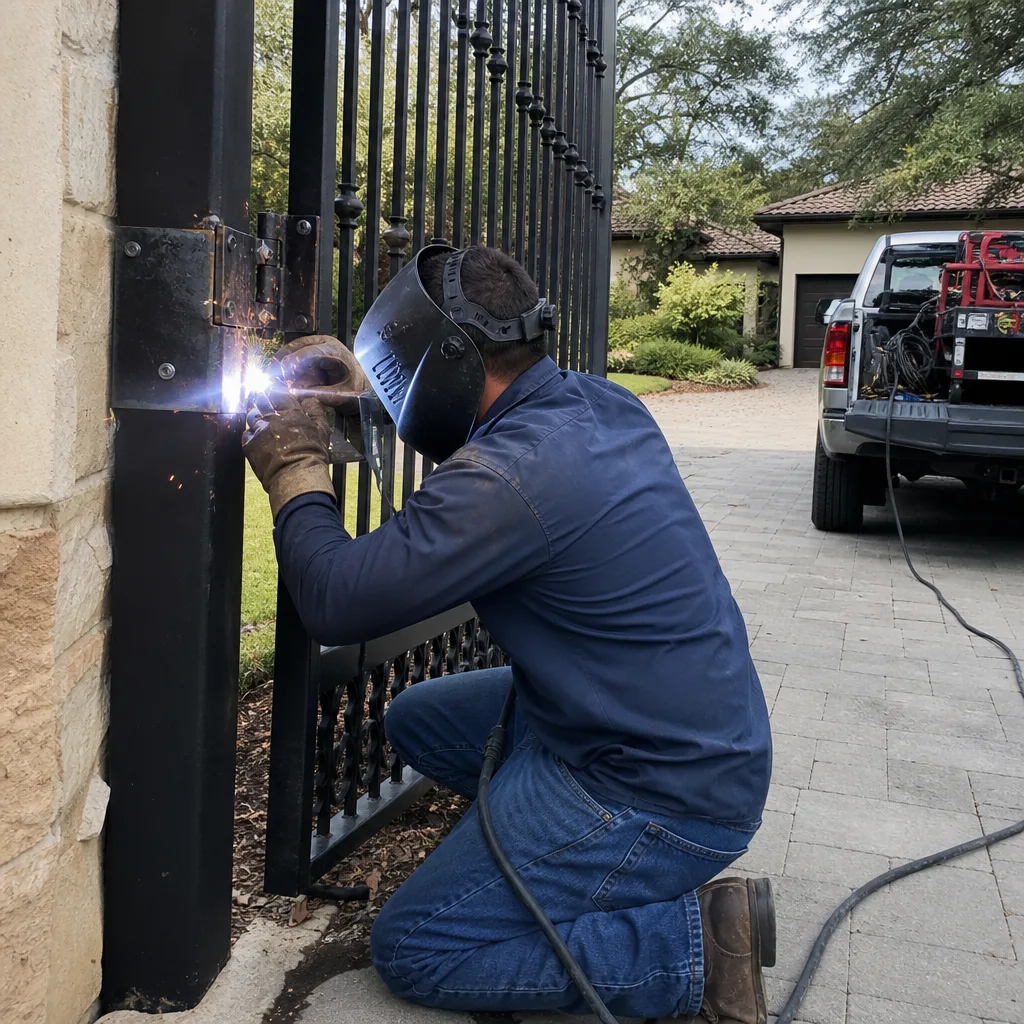
Most gate companies leave you with a credit card receipt and no information. That is not a documentation problem. That is a future-expense problem. Without a record of what was found and what was changed, the next technician cannot build on the previous repair, so they start from zero, and you pay for that inefficiency.
A complete repair record, the kind we produce on every visit under Vance Gate Repair Irving home service standards, should include at minimum these five pieces of evidence:
- The written diagnosis, in one paragraph. Not “motor was bad.” Something like “The FAAC 412 operator drew 9.8 amps on startup (spec max is 6.5) and the gate was out of plumb by 1.2 inches at the latch side. Diagnosis: hinge wear causing motor overload.”
- Limit-switch readings. On any automated gate, the open and close limits control how far the gate travels. If a previous technician set the close limit 12 degrees past the actual stop point, the next gate would slam against the stop every cycle. The record should note the before and after readings.
- Photo log. Photos of the original damage, the disassembled operator, the replacement part before installation, and the finished assembly. If you ever need a second opinion, these photos are worth more than any written description.
- A wiring diagram. Any new connections, splices, or relay additions should be drawn or photographed. When a gate has been worked on by three different companies over 10 years, the wiring can become a tangled mess, and a hand-drawn diagram of the current state saves hours on the next service call.
- Part numbers and torque settings. Knowing that a Gate arm bracket was torqued to 25 ft-lbs means the next technician can verify it, not guess at it. This is how commercial access-control projects are documented, and it applies just as well to a residential gate in Irving.
If a company cannot or will not produce this record, that is a signal. The price you pay for the repair may be lower, but the next repair will be higher because it includes the cost of rediscovering everything.
Which Repairs Need an Electrician vs. a Gate Technician in Texas
Texas electrical code draws a line between low-voltage and line-voltage work, and that line tells you who should be doing what. Gate operators on residential properties in Irving typically run on 120V AC for the motor and 12V or 24V DC for the control boards and safety devices. The low-voltage side, including the photo-eyes, the keypad, the loop detector, and the board, falls squarely in a gate technician’s domain.
The moment the job involves tapping a new 120V circuit from the panel, running conduit, adding a sub-panel, or upgrading the breaker, Texas requires a licensed electrician. A gate technician who is not licensed as an electrician may connect a new operator to an existing, code-compliant outlet or disconnect box, but may not create new line-voltage infrastructure.
Practically, here is how that divides on an Irving gate repair job:
- Gate technician handles: Replacing an operator on existing power, repairing a swing-arm, welding a hinge, adjusting limits, aligning photo-eyes, installing a keypad or intercom, replacing a control board, fixing a maglock on a pedestrian gate.
- Licensed electrician handles: Running new conduit from the house to the gate, installing a new disconnect box, converting an old 240V circuit to 120V for a newer operator, underground cable runs that require trenching and code inspection.
When we encounter a job in Irving that requires new line-voltage work, the correct sequence is to complete the structural and mechanical scope first, document it, and then bring in the electrician with a clear written description of the power requirement: voltage, amperage, and location. That keeps the homeowner from paying a gate technician to wait while an electrician works, and keeps the electrician from guessing what the gate operator actually needs.
Repair or Replace: A Written Cost-to-Value Framework
The decision whether to repair or replace a gate in Irving should not come from a technician’s mood or a company’s sales target. For a deeper look at this choice, see DIY vs Professional Gate Repair: The Irving Homeowner’s Decision Guide. It should come from a written comparison that you can see and verify. Here is the framework we use.
- Itemize the repair cost. Get it in writing, including parts and labor, with part numbers where possible. A real quote for a swing-arm replacement on a FAAC 412 in Irving might run $380 to $520. A full operator replacement on the same gate might run $1,100 to $1,700.
- Itemize the replacement cost. A full new gate and operator in Irving commonly runs between $3,500 and $9,000 depending on gate size, material (steel vs. ornamental iron vs. aluminum), and automation brand.
- Determine the age and condition of the structure. If the gate is 15 years old, the posts are shifting seasonally, and the hinges have been welded twice, repair may simply buy 18 more months. If the gate is five years old and the failure is a single electrical component, replacement is usually wasteful.
- Calculate the cost-per-remaining-year. Divide the repair cost by the expected additional years. A $500 repair that gives you two more years costs $250 per year. A $6,000 replacement that gives you 15 years costs $400 per year. On paper, the repair looks cheaper, but only if the structure is sound.
- Document the deciding factor. If the deciding factor is a post that has moved more than an inch out of plumb and will continue moving, the repair is not economical. If the deciding factor is that the operator brand is still supported and the gate itself is square, repair wins.
We have seen Irving homeowners replace perfectly good gates because a technician said “these old gates just wear out,” and we have seen homeowners dump $2,000 into gates that were structurally dead. The difference is always the presence or absence of a written cost-to-value breakdown. A company that offers gate installation in Irving should be willing to show this calculation, not just give a verbal recommendation.
Common Mistakes to Avoid
- Replacing the motor without checking the post. A gate post that has shifted even one inch will overload any operator. Replacing the motor before verifying gate alignment is the single most expensive mistake Irving homeowners make.
- Ignoring the photo-eye warning signs. If your gate reverses for no reason, or won’t close unless you hold the button, the problem is often a misaligned or dirty photo-eye, not a broken operator. Cleaning and realigning the beam costs under $80. Replacing the board costs over $300 and will not fix a dirty lens.
- Waiting until the gate stops moving entirely. Gates in Irving fail progressively. The grinding sound, the slower travel, the dripping from the operator housing, these are early warnings. By the time the gate is completely dead, the repair is usually two or three times more expensive than it would have been at the first symptom.
- Accepting a verbal quote with no documentation. A technician who will not write down the diagnosis, the price, and the scope before starting is not doing you a favor with a handshake. You are accepting liability for an open-ended invoice.
- Mixing aftermarket and OEM parts on safety systems. Photo-eyes, loop detectors, and edge sensors are safety-critical. Mixing a random aftermarket photo-eye with a Linear board can cause intermittent failures that are dangerous and expensive to chase. Use parts matched to the operator brand whenever possible.
- Assuming a newer motor is always better than a repair. A repaired LiftMaster or BFT operator with a new board and gear set can run another eight years. Replacing a 4-year-old operator because the capacitor failed is like replacing the car because the battery died.
- Not asking for the photo log. If your previous repair left you with no photos and no written notes, you are going to pay the next technician to learn what the last one already knew. Documentation is not a luxury. It is the thing that makes your next repair cheaper.
When to Call a Professional
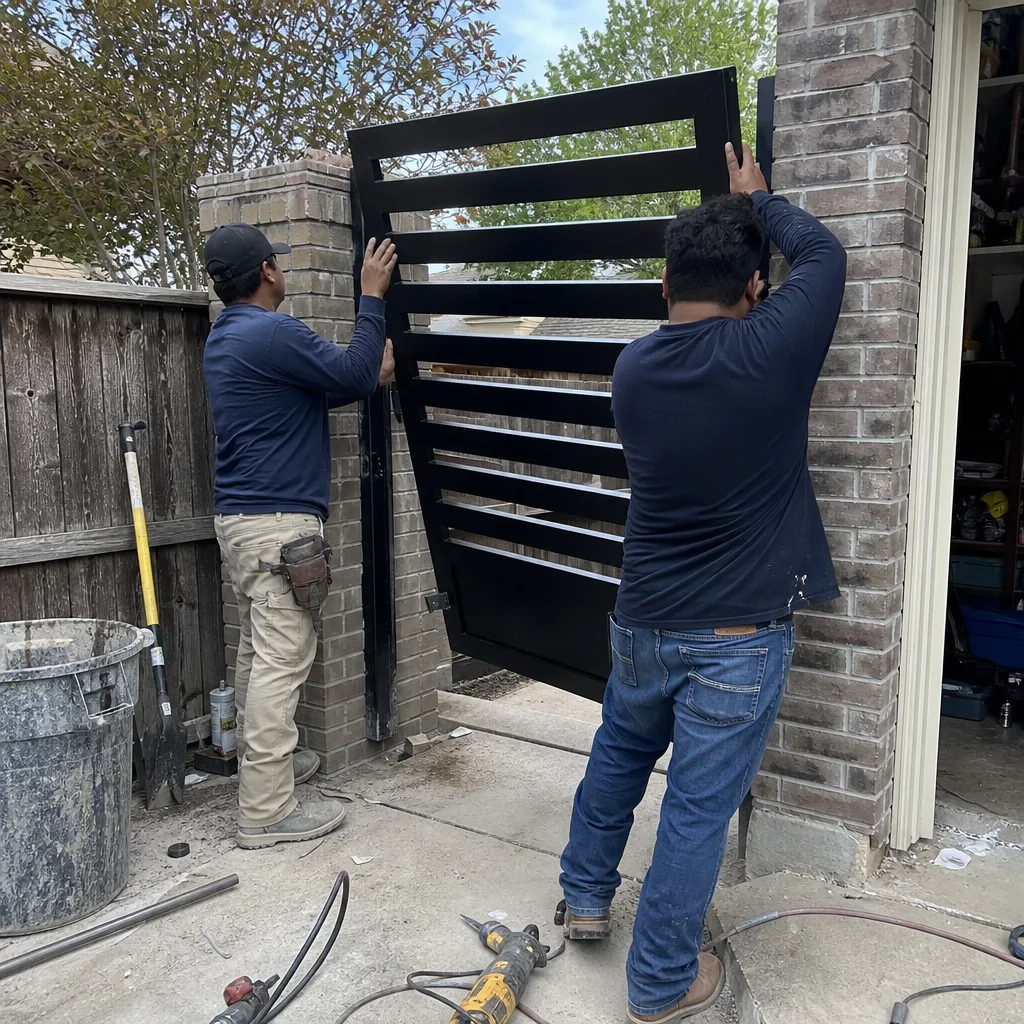
Call a gate technician when you hear grinding from the operator, see the gate dragging or leaning, smell burnt electronics, or find the gate reversing when nothing is in the path. Also call if the gate has begun moving slower than it did a month ago, or if the keypad works intermittently. These are not normal wear patterns. They are failures in progress, and the sooner you document them, the cheaper the resolution.
If the gate is putting obvious strain on the hinges or the post is visibly out of plumb, do not attempt to brace it with lumber and continue using it. A gate falling out of its track can injure someone, and a gate under tension from a damaged spring or counterweight deserves professional handling. High-tension components like torsion springs on older ornamental gates should never be adjusted by a homeowner. The stored energy is enough to cause serious injury.
Vance Gate Repair Irving offers free estimates in Irving, and every quote is written before any work begins. Call (817) 510-4183 if you need someone who will document the repair.
Frequently Asked Questions
Most gate repairs in Irving fall between $180 and $2,900. The low end covers diagnostics, photo-eye realignment, and limit-switch adjustments. The mid range, $400 to $900, covers swing-arm replacements, hinge re-welds, and control-board swaps. The upper end covers full operator replacements or post re-setting, which requires excavation and concrete work. The exact price depends on the operator brand and whether the structure is square.
Common repairs like photo-eye alignment, limit-switch adjustment, and capacitor replacement can often be completed same-day. Structural repairs, post re-setting, and full operator replacements are scheduled work because they require measuring, ordering, and concrete cure time. We will tell you which category your repair falls into before we schedule it, and the price is written before work starts.
Expect eight to twelve years from a properly installed gate motor in Irving, assuming the gate structure stays square and the motor gets basic service. In our experience, the motors that fail early in Irving are not failing from brand defects but from working against a gate that has dragged or bound for years. A motor that cycles 20 times a day against a misaligned gate will burn out in five years or less.
Yes. We service and repair all four of those brands, along with five others, so you do not need to replace a working operator just because your previous technician only knew one brand. If the operator is repairable, we repair it. If it is not, we show you the measurements that led to that conclusion.
Every Vance Gate Repair Irving visit includes a written diagnosis, a photo log of all work, limit-switch readings where applicable, and a record of part numbers and torque settings. You can also explore more guides & resources on our blog. That record is yours to keep, and it means the next technician, whether that is us or someone else, starts from evidence instead of guesses.
On gate installation in Irving, we handle the low-voltage and safety-device work, including photo-eyes, safety edges, loop detectors, and intercom wiring. If a new line-voltage circuit is required from the panel to the gate, Texas code requires a licensed electrician, and we coordinate that scope with a written specification so there is no ambiguity about amperage, conduit, or location.
The Bottom Line
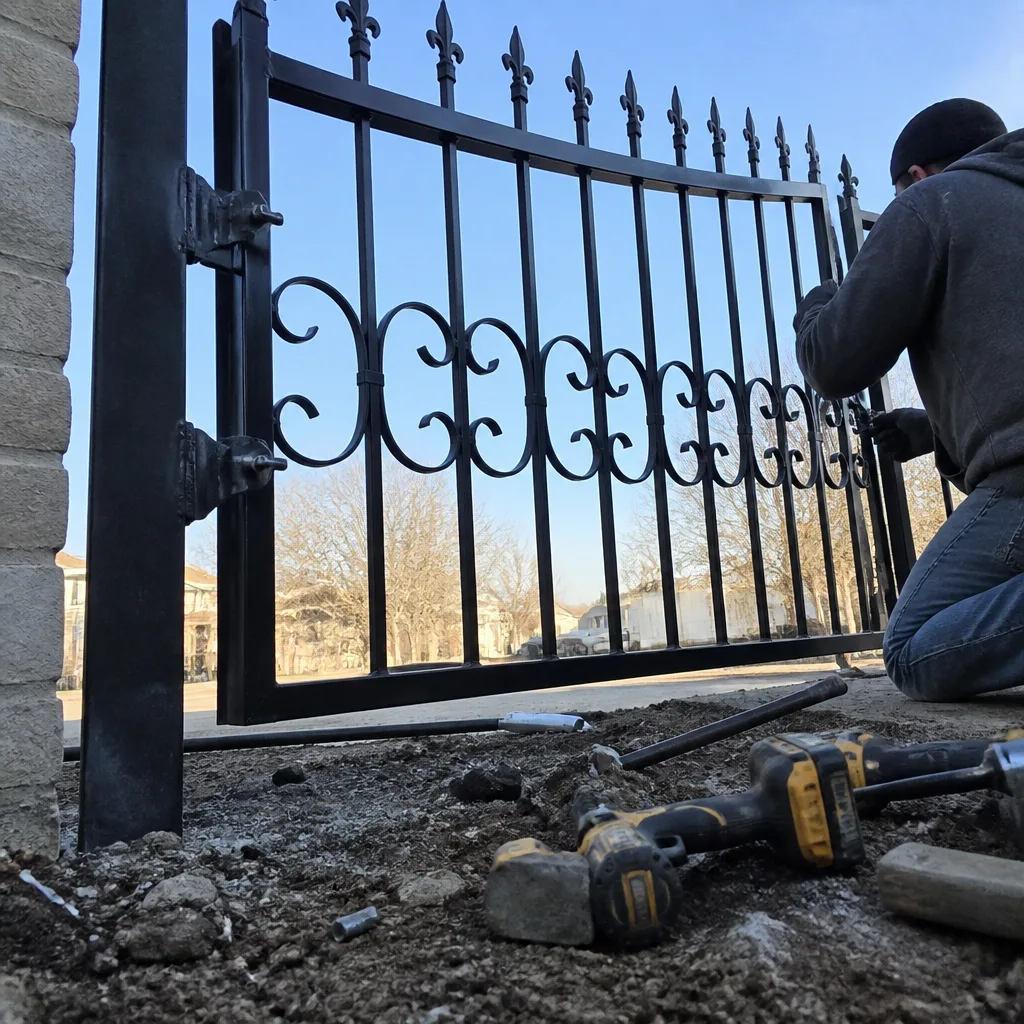
Gates in Irving fail for reasons that go deeper than the part that broke. The clay soil shifts posts. The heat stresses capacitors. The repeated dry-wet cycles open and close hairline cracks in welds and concrete. If you treat every gate failure as a parts problem, you will keep paying for the same repair wearing different part numbers. If you treat it as an investigation, where the goal is to document the cause, the fix lasts. That is the entire point of a gate repair in Irving that includes a written record: you stop guessing, and you stop paying twice.
Written by Adrian Vance, Owner at Vance Gate Repair Irving, serving Irving since 2014.