
Last updated September 20, 2026
Free on-site gate assessment - hinges, posts, and your LiftMaster or Nice gate operator checked before anything is quoted
The assessment is free and the quote is the invoice.
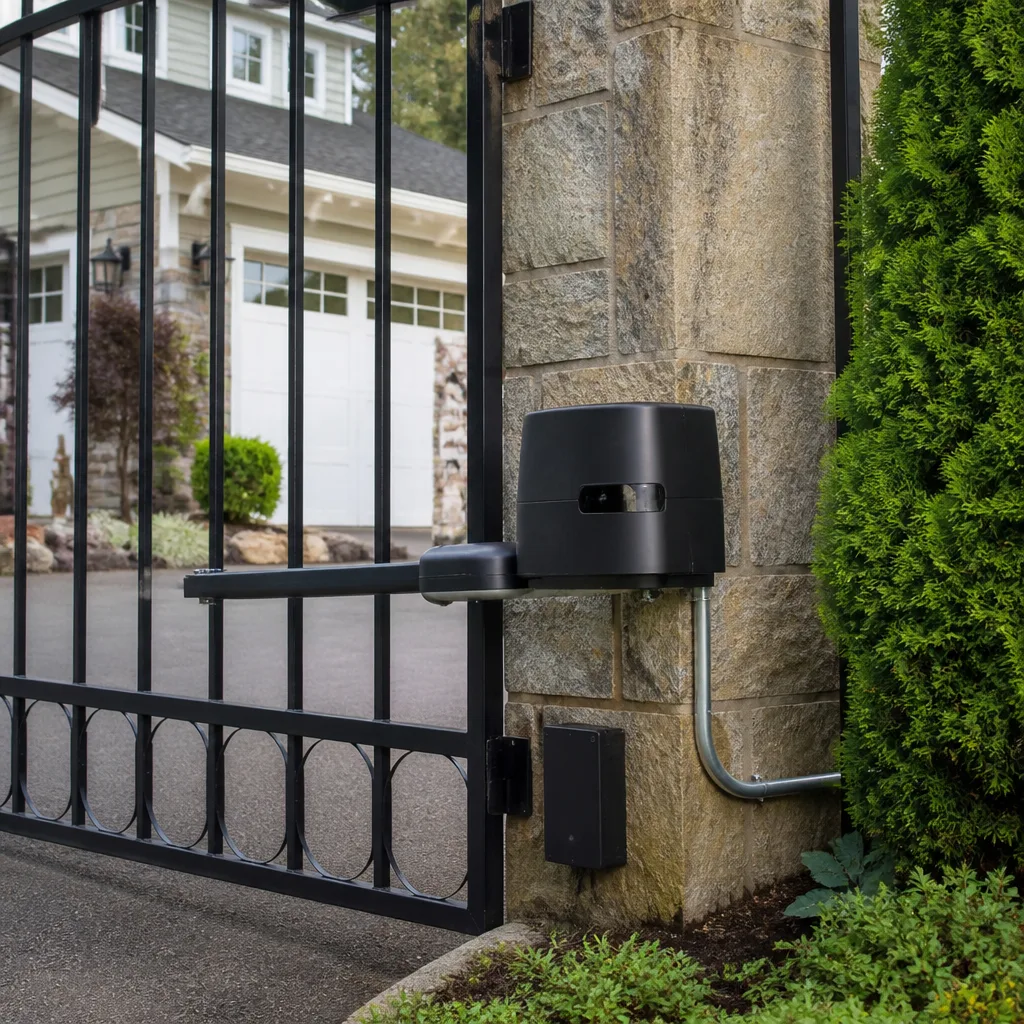
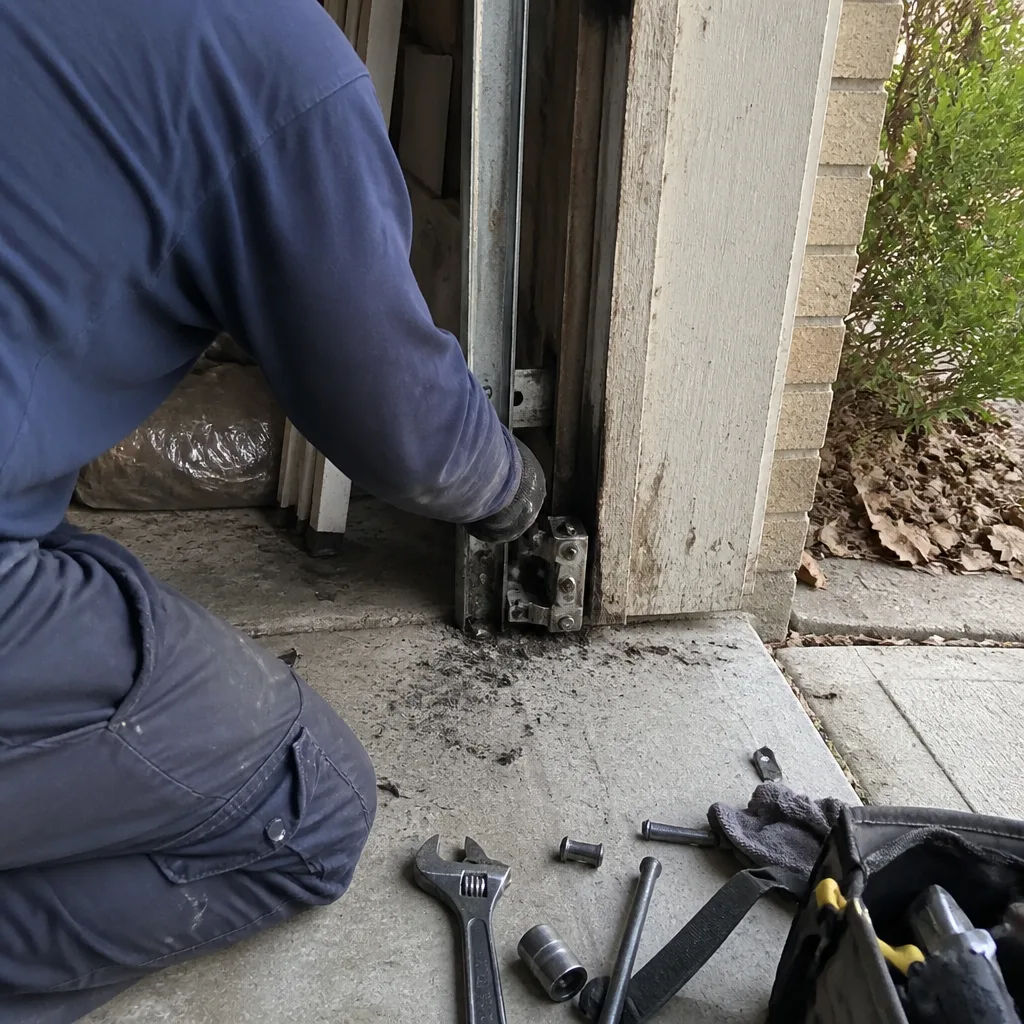 Before
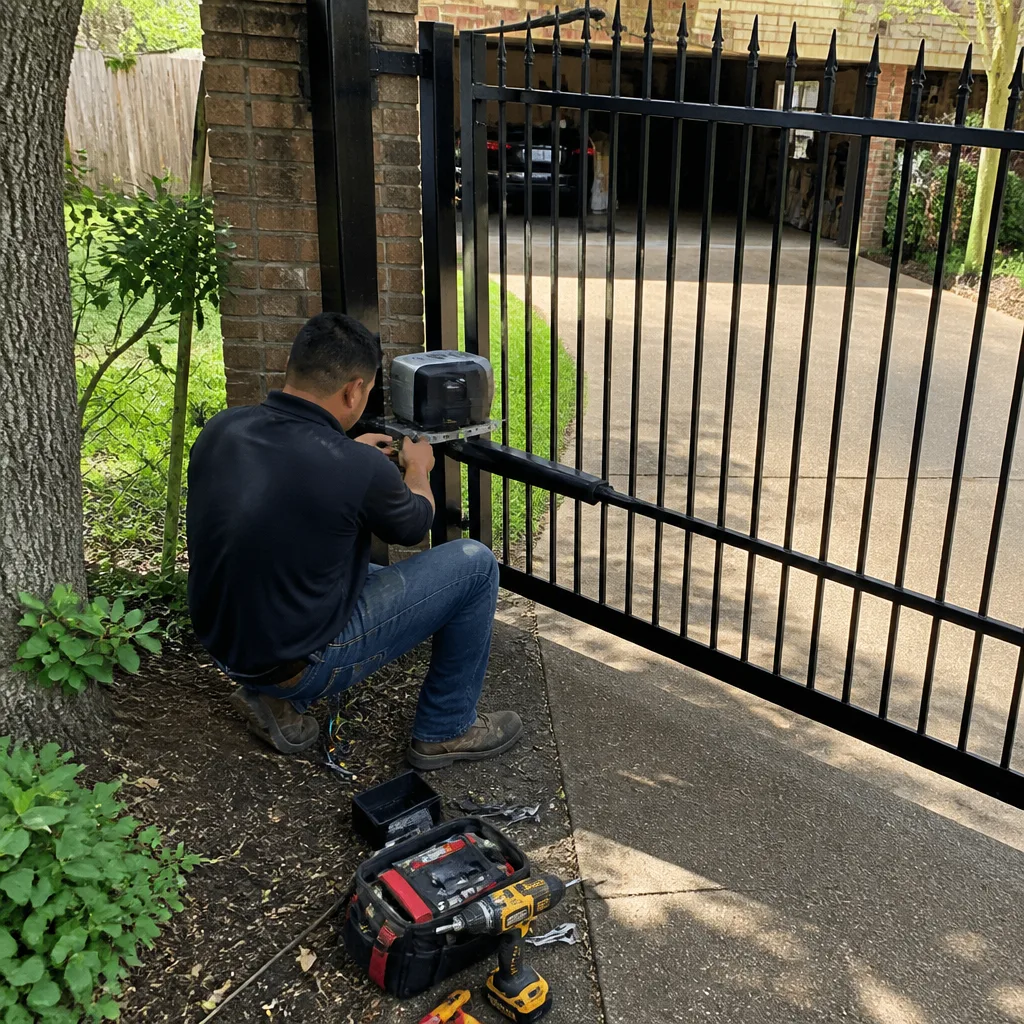 After
After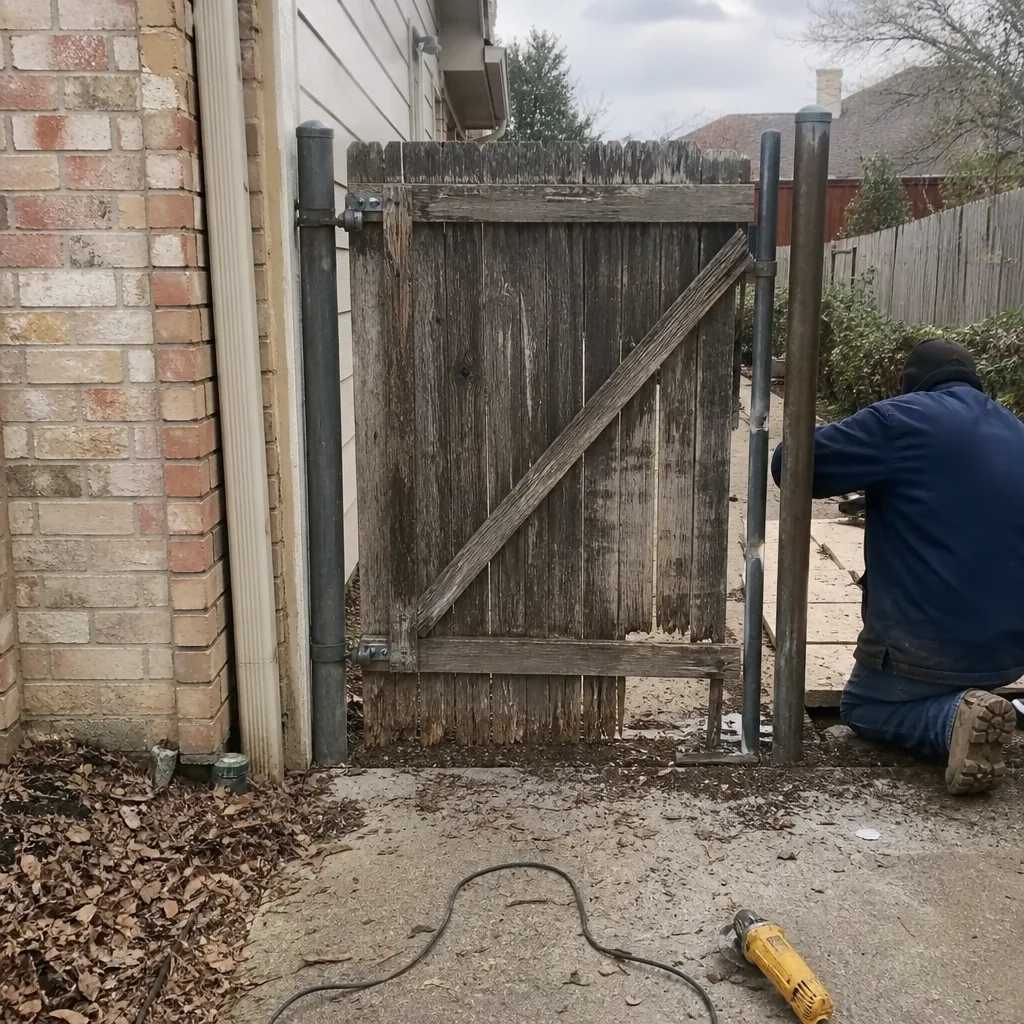 Before
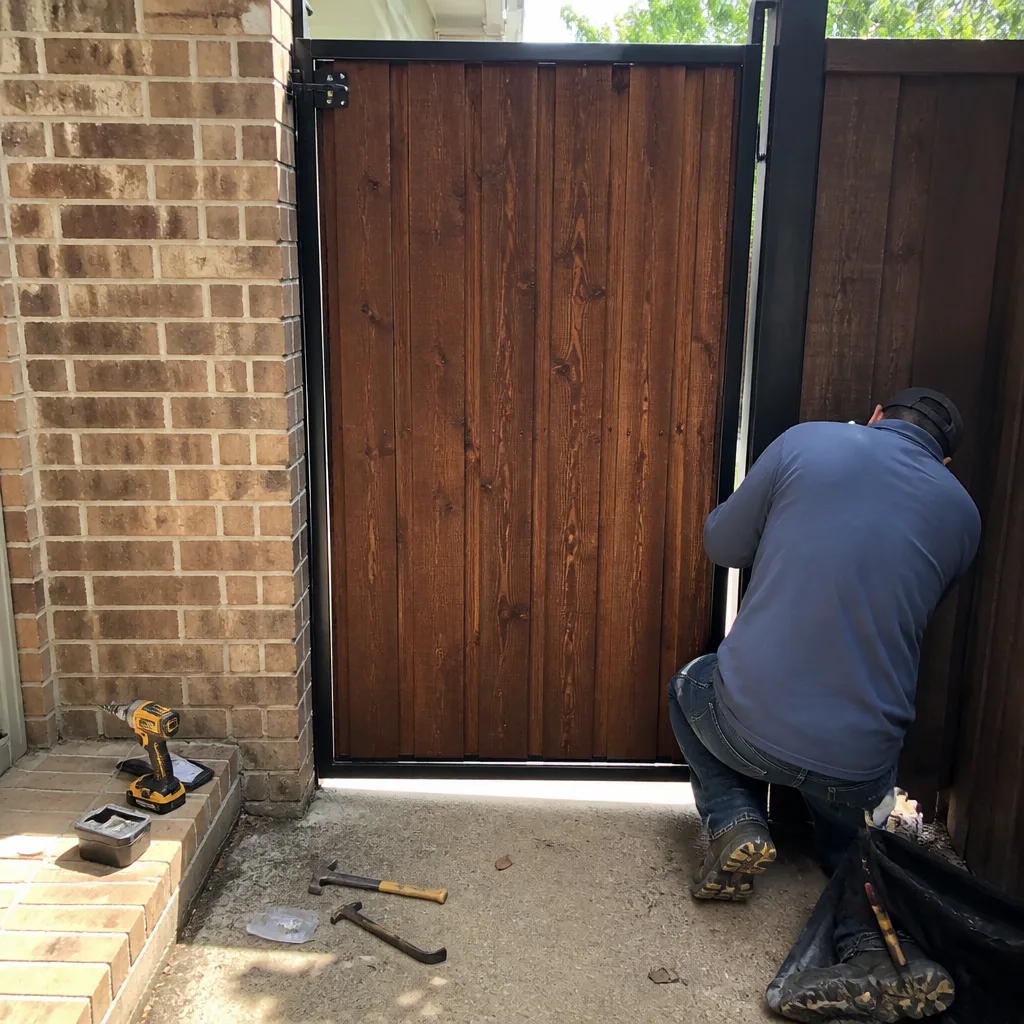 After
After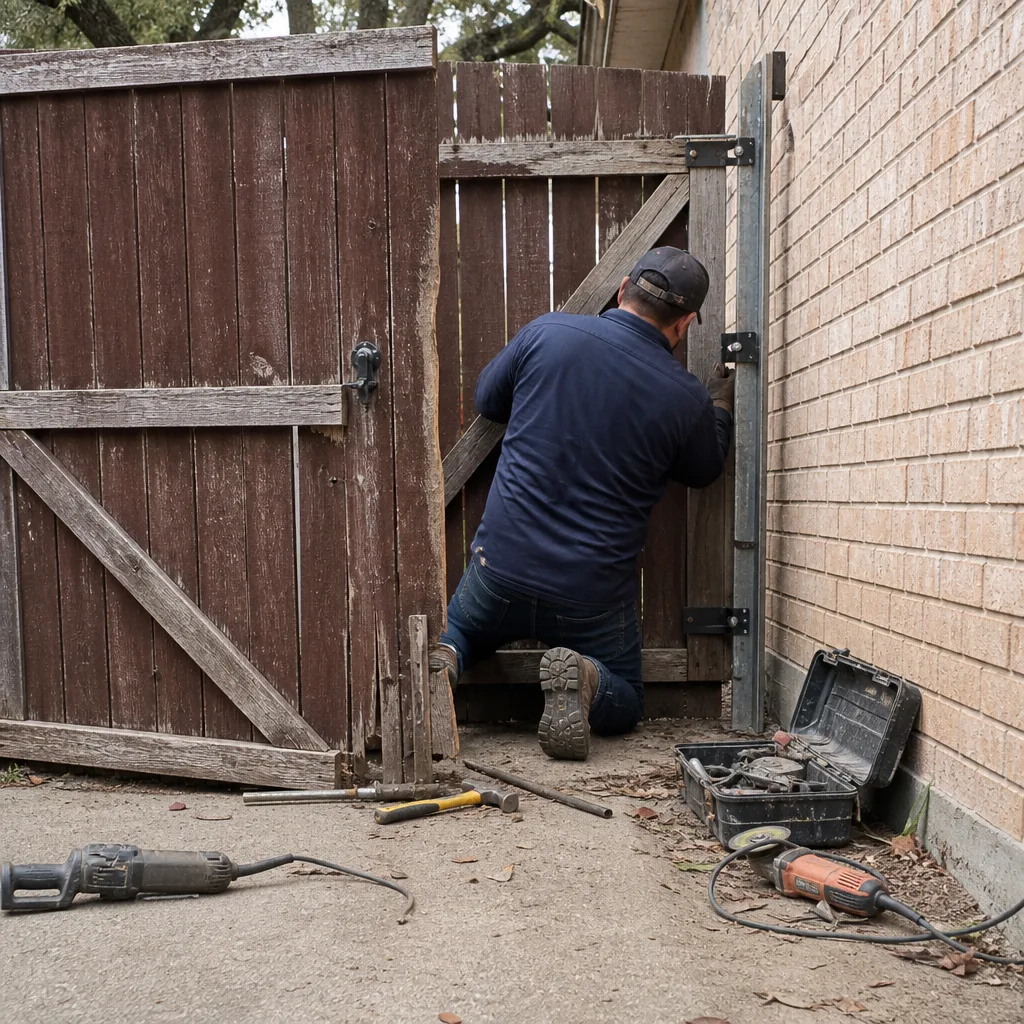 Before
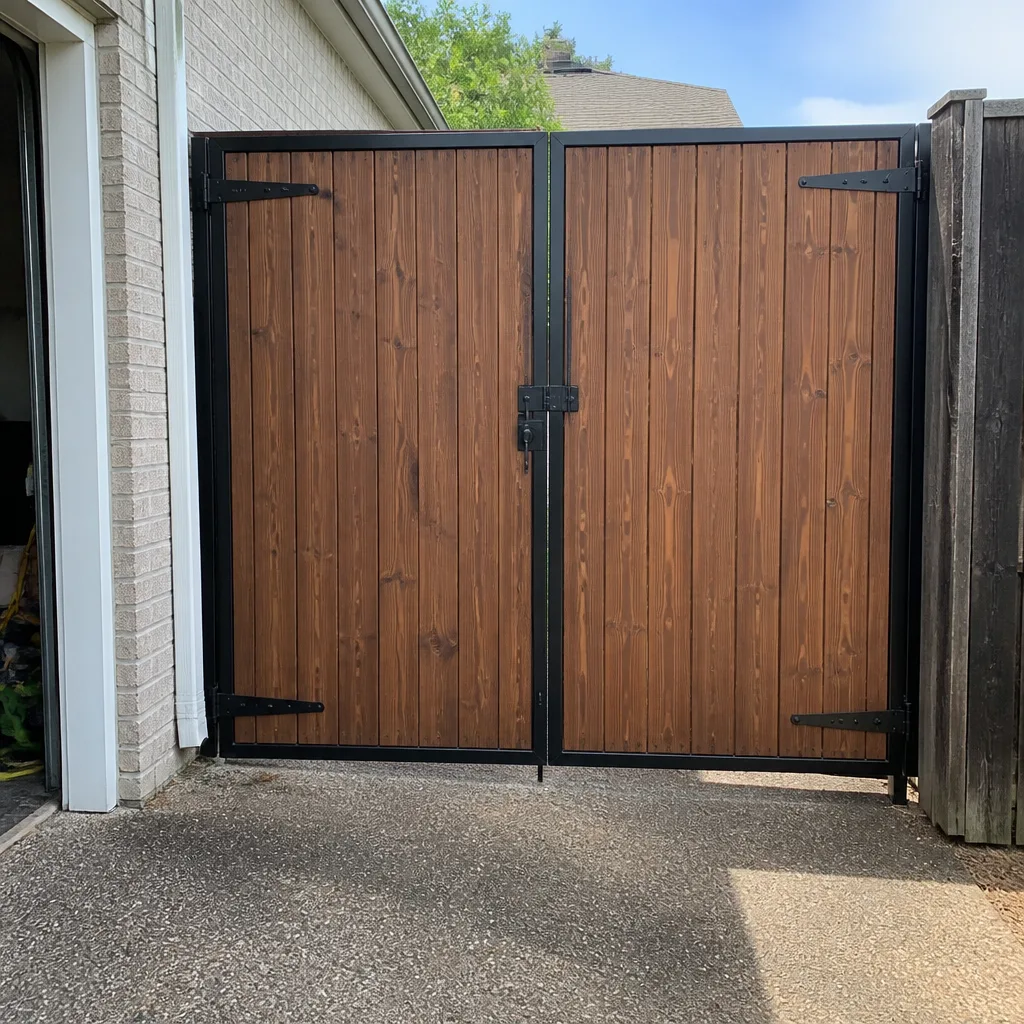 After
AfterSeasonal Gate Repair Care for Irving: Year-Round Homeowner’s Guide
Irving gate operators fail most often in August and in the two weeks after the first significant fall storm. That’s not coincidence. Heat-swollen hydraulic fluid, photo-eyes knocked out of alignment by thermal expansion, and debris-packed limit channels follow a predictable calendar in North Texas, and the repair industry has no incentive to help you anticipate them. A $40 inspection in June prevents the $900 motor replacement in September. This guide maps the specific failures each season brings to Irving driveways, what to check, what to leave alone, and how to build a maintenance log that saves you from paying twice to diagnose the same problem. For a deeper dive, see The Complete Guide to Gate Repair in Irving.
Quick Answer
Seasonal gate care in Irving means four targeted inspections per year: check hydraulic fluid and photo-eye alignment before summer heat peaks, clear limit-switch channels after fall storms, watch bearing grease viscosity during winter cold snaps, and measure ground clearance after spring soil shifts. Most annual repair costs trace back to two or three preventable failures that follow these seasonal patterns. A homeowner who spends 20 minutes per season on these checks typically avoids the bulk of costly operator replacements.
Table of Contents
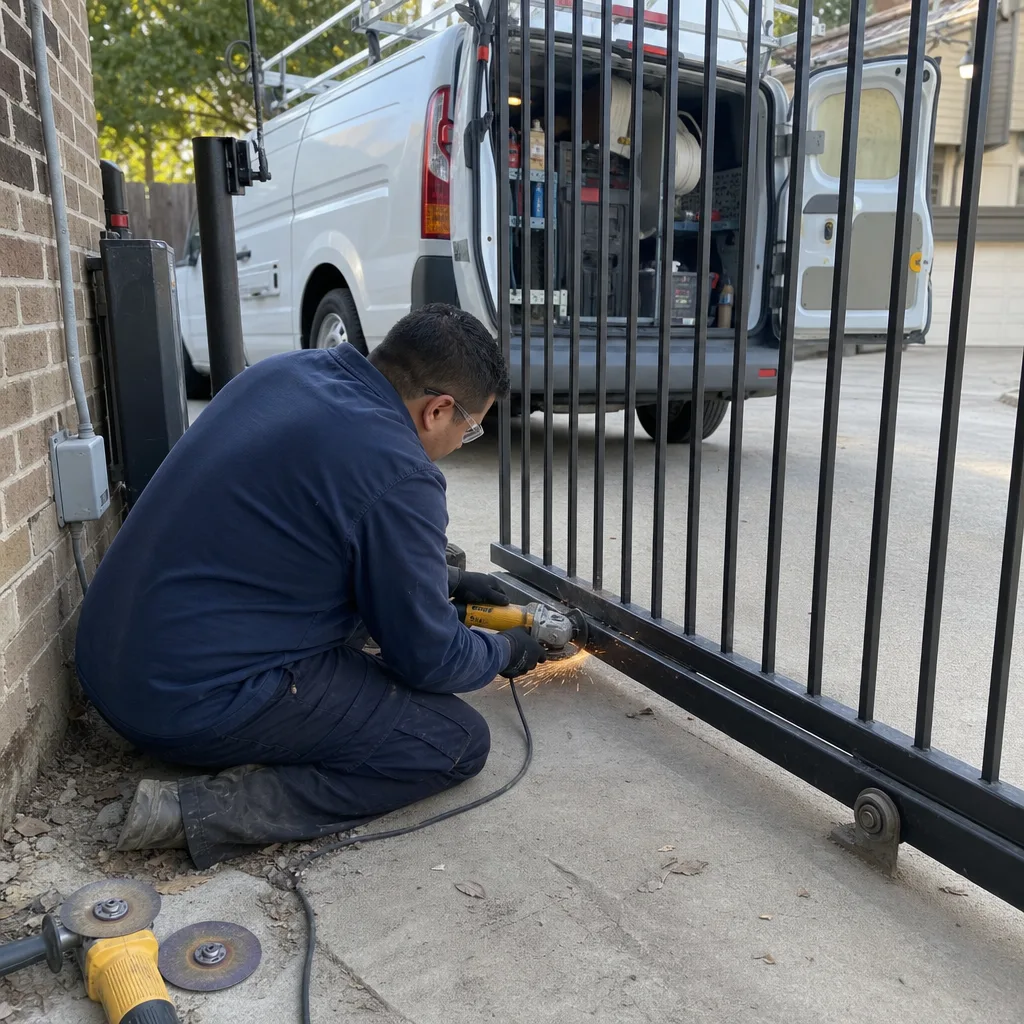
- Summer Heat and the Three Things That Fail Above 95°F
- Fall Storm Season and the Debris Problem in Limit Channels
- Winter Cold and the Grease Viscosity Threshold
- Spring Soil Expansion and Ground Clearance
- How to Build a Seasonal Gate Log Any Technician Can Read
- Common Mistakes to Avoid
- When to Call a Professional
- Frequently Asked Questions
BeforeAfterSummer Heat and the Three Things That Fail Above 95°F
Irving summers routinely push past 95°F for weeks at a stretch, and sustained heat at that level changes how gate components behave. We’ve repaired enough August failures in Irving to know the pattern: three specific things go wrong, and they go wrong in the same order every year.
First, hydraulic fluid thins. Hydraulic gate operators rely on fluid viscosity to move the gate arm smoothly. When ambient temperatures sit above 95°F for consecutive days, the fluid thins beyond its designed operating range. The pump has to work harder to build pressure, which increases motor heat, which further stresses the fluid. This is the feedback loop that kills hydraulic operators in late summer. A homeowner can check the fluid reservoir without opening the hydraulic circuit; the reservoir sight glass should show fluid at the manufacturer’s marked level, and the fluid should look clear or lightly amber, not dark brown or milky.
Second, photo-eyes drift. A photo-eye is the infrared beam that stops the gate if something crosses the path. Mounted on metal posts or gate frames, these units expand and contract with temperature swings. In Irving, where a July afternoon can hit 102°F and a thunderstorm can drop the temperature 20 degrees in an hour, the mounting brackets flex enough to knock the beam out of alignment. The gate then refuses to close, or reverses mid-cycle, because the safety circuit reads “obstructed” even when the path is clear. The inspection is simple: look at the small LED on the photo-eye. A solid green light means aligned. A blinking or red light means the beam is off. If both eyes show green and the gate still reverses, the problem is elsewhere.
Third, wiring insulation breaks down. North Texas heat ages PVC wire insulation faster than the national average. We’ve pulled apart junction boxes in Irving where the insulation crumbled to dust inside what looked like an intact outer jacket. The single inspection that catches all three of these summer failures: open the operator cover, visually check the fluid or the drive belt tension, confirm both photo-eye LEDs are green, and run the gate through two full open-close cycles while watching and listening for hesitation. Twenty minutes in June beats a no-notice failure in August.
If the operator cover feels too hot to keep your hand on after the gate runs, that’s a heat warning sign worth a call. Sustained motor temperatures above the manufacturer’s duty-cycle rating are the single most common reason we replace gate motors in Irving during August and early September. The duty cycle matters more in summer than any other season because the motor never gets a chance to cool between cycles.
- Fluid check: sight glass level and color, once in June, once in July.
- Photo-eye check: both LEDs green, brackets tight, no visible corrosion at the wire entry.
- Insulation check: feel the operator cover after one full cycle; excessive heat means a service call sooner, not later.
- Duty cycle: if the gate runs more than 6 cycles in an hour during peak heat, give it a 15-minute rest.
For a full breakdown of what a summer repair typically involves, our Gate Repair in Irving page covers the common failure modes and what we document on every visit.
Fall Storm Season and the Debris Problem in Limit Channels
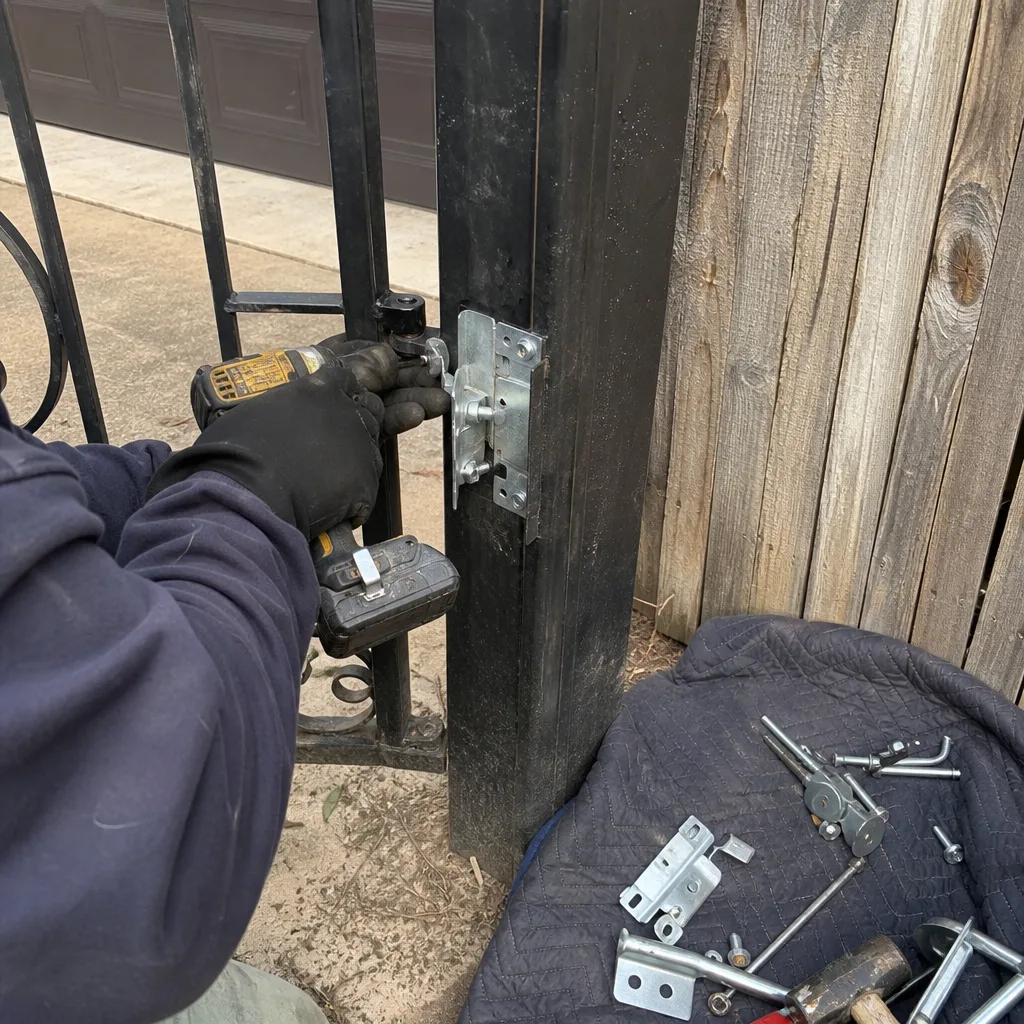
Irving’s storm season starts in October and runs through November, bringing wind, leaf drop, and the kind of fine grit that works its way into places it shouldn’t. The component that suffers most: the limit switch channel. Limit switches tell the gate operator exactly where to stop. Most residential gates use a magnetic or mechanical limit assembly mounted inside the operator housing or on the gate track. When leaf fragments, dirt, and acorn shells pack into the channel, the switch can’t travel its full range, and the gate stops partway, slams, or throws an error code.
The fix sounds simple, and the temptation is to grab a screwdriver and scrape the channel clean. Do not reset calibration in the process. The limit switch’s position is set to specific open and closed points. If you dislodge the switch or move the cams while clearing debris, the gate will lose its open and close positions. Then you’re not dealing with a debris problem anymore; you’re dealing with a recalibration, and that requires a voltmeter and an understanding of the operator’s programming menu.
What you can safely do: before the first big storm of fall, walk the gate track and operator housing. Look for accumulated leaves, pine needles if you have pines nearby, and the fine gray dust that Irving storms drive into every seam. Use a dry brush or compressed air to clear loose debris from the outside of the operator housing and the visible portion of the gate track. Do not remove the operator cover unless you’re prepared to document the wire positions inside. If the gate starts misbehaving after a storm, the most likely cause is debris in the limit channel, and the correct sequence is: clear what’s visible, run a full cycle, and if the gate still misbehaves, call someone who can photograph the limit switch position before touching it.
We document limit switch positions on every fall service call in Irving because one of the most common things we see is a homeowner who cleared the channel, bumped the switch, and now the gate opens 14 feet but closes 11. The motor isn’t broken. The calibration is lost. And without a photographic record, the next technician has to re-diagnose from scratch. That’s a $150 service call that could have been a $0 visual inspection.
Winter Cold and the Grease Viscosity Threshold
Irving winters don’t get cold by northern standards, but they get cold enough to matter. The temperature range to watch: below 35°F. At that point, the grease packed into gate hinge bearings becomes noticeably more viscous, and the motor works harder to move the same gate. This is a strain problem, not a failure problem. One cold night won’t kill a healthy operator. A week of nights in the 20s, combined with hinge grease that hasn’t been refreshed in three or four years, pushes the motor past its duty cycle on every open and close.
The symptom is easy to spot: the gate moves slower than normal, and the motor makes a lower, labored sound. Some operators compensate with a higher torque setting, which masks the problem while stressing the motor further. The correct response is not to crank up the torque. It’s to refresh the grease in the hinge bearings before winter arrives, using a grease rated for low-temperature use. Most manufacturers specify a lithium-based grease with an operating range that reaches down to at least 0°F. If the existing grease is stiff, darkened, or crusted, it’s past due.
The motor’s duty cycle matters here more than in summer. A cold-soaked motor draws more current at startup, runs hotter internally once it’s running, and cools faster when it stops. This thermal cycling stresses the windings. Over multiple winters, the cumulative effect is measurable: we see more motor replacements in January and February in Irving than any other cold-weather month, and the common thread is old grease in the hinge bearings. The fix costs less than the replacement by an order of magnitude.
- In early December, open and close the gate by hand (pull the release handle first). If it takes noticeable force to move, the hinges need grease.
- Apply low-temperature lithium grease to each hinge bearing point. Wipe away the old grease first; don’t layer new over oxidized old.
- Run the gate through a full automatic cycle and listen. A labored motor sound that persists after greasing means the motor itself needs inspection.
- If temperatures drop below 25°F, reduce unnecessary gate cycles. Every avoided cycle in extreme cold extends motor life.
If you’re not sure whether your operator can handle Irving’s cold snaps without intervention, our Gate Motor & Opener in Irving page covers what we check on a winter service call and what we leave behind in the documentation.
Spring Soil Expansion and Ground Clearance
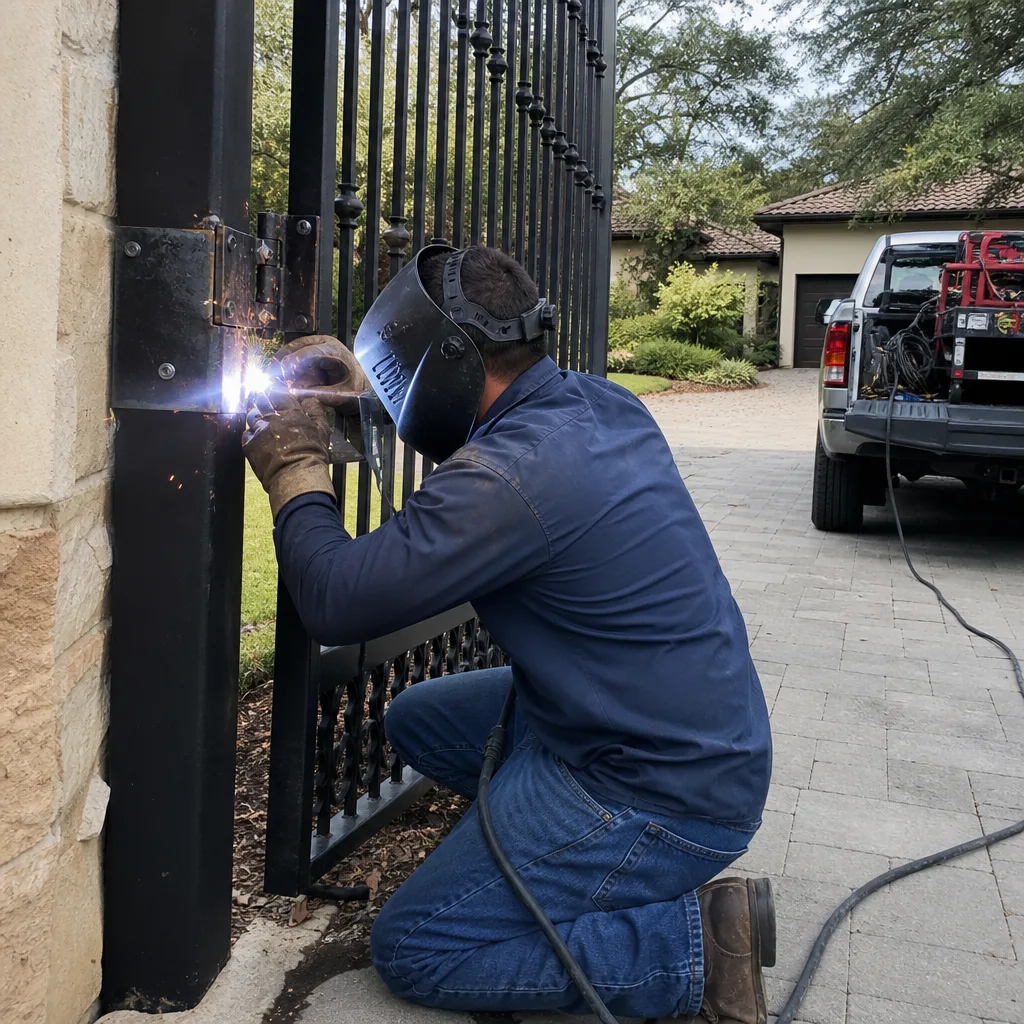
North Texas soil is expansive clay. It swells when wet and contracts when dry, and Irving’s spring rain pattern, wet March, drying April, creates exactly the cycle that moves gate posts and shifts ground clearance. A gate that had four inches of clearance at the latch in December might have two and a half in April because the soil under the gate post heave upward. This matters for two reasons: first, a gate dragging on the ground strains the motor and wears the hinge bearings unevenly. Second, the shifted geometry changes how the gate meets the latch and the photo-eye beam, which can cause nuisance reversing or failure to latch.
Spring is the right time for an annual baseline measurement. It’s a five-minute job: measure the gap between the bottom of the gate and the ground at three points (latch side, middle, hinge side), write the numbers down, and date the sheet. If the gap changes by more than half an inch from one season to the next, the post has moved, and the fix is not to cut the gate; it’s to stabilize the post before the geometry gets worse.
On homes in older Irving neighborhoods with mature trees and established foundations, soil movement tends to be smaller but still measurable. On newer construction, where the soil was recently disturbed, the movement can be dramatic. We’ve measured gates in Irving that dropped over an inch in one spring. The homeowners noticed the gate scraping and assumed the gate sagged when the hinge side post had actually risen.
The annual baseline also gives your technician a reference point. If a repair is needed later, the question isn’t “does this look right?”; it’s “has this changed since April 15th?” That’s a faster diagnosis, and it’s the kind of record that prevents paying twice to re-discover the same problem. If you want to see how we handle full installations where soil movement is a factor from day one, our Gate Installation in Irving page walks through the process.
How to Build a Seasonal Gate Log Any Technician Can Read
The difference between a $120 service call and a $400 service call is often documentation. When a technician arrives at a gate with no history, they start from zero: test everything, measure everything, diagnose from scratch. When a technician arrives with a one-page log that says “limit switch reset in March 2025, photo-eye aligned in June, ground clearance measured at 3.1 inches in April,” they can skip the discovery phase and go straight to the current problem.
Building the log takes 10 minutes per season. It doesn’t need to be technical. It needs to be consistent, dated, and specific. Here’s how to set it up:
- Create a single sheet per year. A simple table with rows for each season and columns for: date, what was checked, what was found, what was changed, and who did it.
- Record measurements, not impressions. “Ground clearance: 3.1 inches latch side, 3.0 hinge side” is useful. “Gate looks fine” is not.
- Photograph anything unusual. A photo of a corroded hinge, a cracked wire, or a misaligned photo-eye bracket, with the date visible, is evidence a future technician can use.
- Keep receipts and part numbers. Every replaced part has a manufacturer part number. Write it down. A future technician who can cross-reference the part doesn’t have to disassemble anything to find out what’s inside.
- Hand the log to any technician who comes out. If they don’t want to look at it, that tells you something. The good ones will read it first and thank you.
We file a written record on every job under The Haven Standard, specifically Clause 4 (Evidence on every job). Your seasonal log is the homeowner’s version of the same habit. It costs nothing and saves money on every future service call.
Common Mistakes to Avoid
- Lubricating the gate track with WD-40. WD-40 is a solvent, not a lubricant. It strips grease and leaves the track dry. Use a proper lithium grease on hinges and a dry silicone spray on track rollers, and only if the manufacturer recommends it.
- Adjusting the torque setting to “fix” a slow gate. Higher torque masks the underlying problem (cold grease, worn hinge, debris in the track) while overheating the motor. If the gate moves slowly, find out why, don’t force it harder.
- Clearing debris from the limit channel without documenting the switch position. If you bump the switch or cams, you’ve just created a calibration problem. Photograph everything before you touch anything inside the operator housing.
- Ignoring a photo-eye warning light through the winter. A misaligned beam might cause nuisance reversals only occasionally at first, but the underlying bracket movement gets worse with each freeze-thaw cycle. Fix it when the light first blinks.
- Skipping the spring soil check because the gate “still opens.” Ground clearance changes slowly and silently. By the time the gate audibly scrapes, the post has already moved enough to stress the hinges and motor.
- Replacing a gate motor without addressing why it failed. A new motor on hinges with old grease or a post that has shifted will fail the same way the old one did. The failure cause matters more than the failure itself.
When to Call a Professional
Some seasonal maintenance is safe for a homeowner: visual checks, debris clearing on the outside of the operator, ground clearance measurements. Other work is not. If the operator cover is open and you’re looking at wires, capacitors, or a chain under tension, stop. A capacitor holds charge even when the unit is unplugged, and it can deliver a serious shock. Chain-driven operators under tension can injure fingers if the tension releases suddenly. If the gate has come off its track, if the motor smokes or burns, or if the limit switches are inside the housing and you can’t see them without removing the cover, call our Gate Repair services. Vance Gate Repair Irving dispatches background-checked, uniformed technicians to every job, with name and photo provided before arrival. Free estimates in Irving. Call (817) 510-4183.
Frequently Asked Questions
Most seasonal inspections in Irving run between $89 and $160, depending on what’s included. A basic visual inspection with photo-eye alignment and ground clearance measurement sits at the lower end. Adding grease refresh, limit switch documentation, and a full cycle test pushes toward the higher end. At Vance Gate Repair Irving, we write the price down and hand it to you before any work starts, so there’s no surprise at the end. Call (817) 510-4183 for a written quote.
Yes. Heat-related failures (thinned hydraulic fluid, overheated motors, drift in photo-eye brackets) and cold-related failures (viscous grease, duty-cycle strain) are both repairable. The key is identifying which failure happened, and in our experience, the seasonal pattern usually points to it quickly. Call (817) 510-4183 and we’ll walk through what you’re seeing before we even send a truck.
First, check whether the gate is physically safe to leave in place (not hanging off its track, not dragging). Second, visually inspect the track and operator housing for debris without removing any covers. Third, run one full cycle and observe where it stops. If the gate stops short or reverses, the likely cause is debris in the limit channel or a misaligned photo-eye. Don’t attempt to reset calibration yourself. Call (817) 510-4183 and describe what you found; we can often diagnose over the phone and give you a price before the visit.
We work on nine major gate-automation brands: LiftMaster, FAAC, BFT, Linear, Viking, Ghost Controls, DoorKing, Elite, and Mighty Mule. That means we repair the motor already on your property rather than steering you toward a replacement you may not need. If you have a FAAC or LiftMaster operator and it’s misbehaving, that’s a standard service call for us.
Every visit includes a documented photo record of what was found, what was adjusted, and what was replaced. We also publish more guides & resources to help Irving homeowners maintain their gates between visits. You get the photos before we leave, and we file a copy in the job record. That’s Haven Standard Clause 4, and it’s included at no additional charge on every repair we do in Irving.
We’ll review any written estimate from another company at no cost. Bring the paperwork, and we’ll go through it line by line and tell you what’s necessary, what’s not, and what we’d charge for the same work in writing. That’s a free second opinion, and it’s part of how we’ve built our reputation in Irving since 2014.
The Bottom Line
Irving’s climate concentrates gate failures into predictable seasonal windows: heat and hydraulic stress in summer, debris and limit-channel problems in fall, grease viscosity and motor strain in winter, soil movement and ground clearance in spring. Each season has one or two cheap inspections that catch the failure before it becomes expensive. The homeowner who does those inspections, records the measurements, and hands the log to a technician on the next service call avoids the common trap of paying for re-diagnosis. That’s the entire game. Twenty minutes a season, four times a year, and the documentation habit that comes with it, keeps a gate running for years past when it would otherwise fail. If you want someone else to handle it, our Vance Gate Repair Irving home page has everything we cover, and we answer the phone live, 24/7, at (817) 510-4183.
Written by Adrian Vance, Owner at Vance Gate Repair Irving, serving Irving since 2014.